
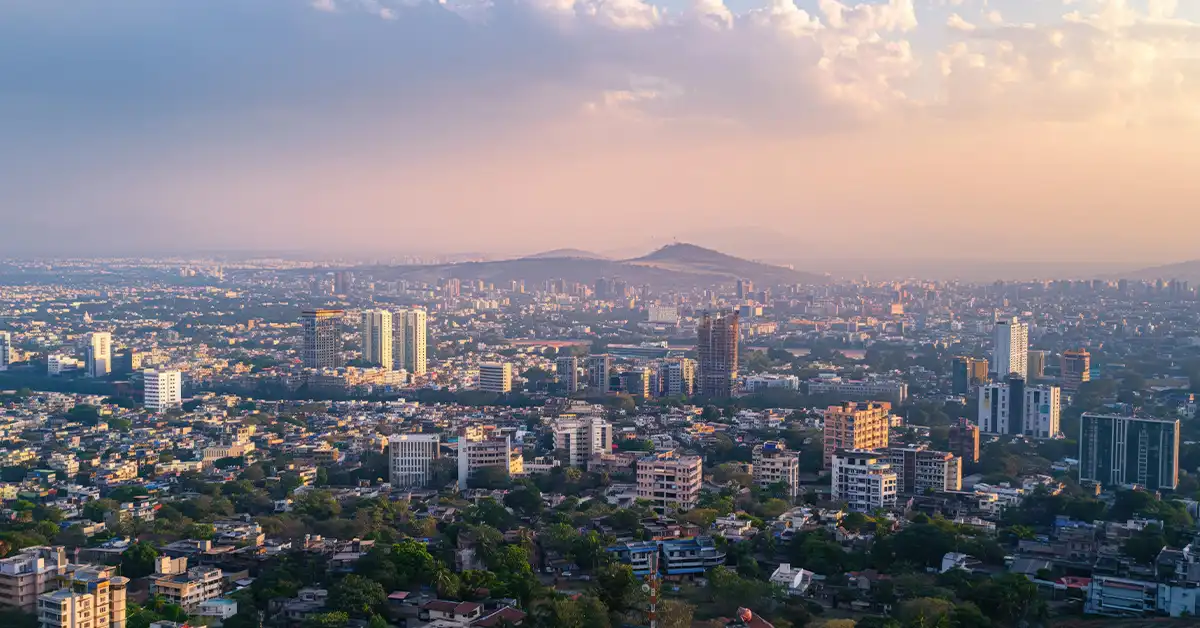
The Pune real estate scene is experiencing a significant change, especially in the luxury segment. The ₹2 crore-plus category now accounts for an estimated 12–15% of all residential transactions in Pune, up from around 6% in 2019. This growth reflects deeper structural changes driven by infrastructure expansion and evolving buyer priorities. In this piece, we’ll get into the Pune real estate market dynamics shaping 2026 and analyze emerging Pune real estate projects in high-demand corridors. We’ll track Pune real estate prices in key micro-markets and provide our Pune real estate market forecast 2025 to help you make informed investment decisions.
Pune Real Estate Market Overview in 2026
Pune recorded approximately 81,000 residential unit sales in 2025 and claimed the top position among all Indian metros. This performance stands out, especially when you think that Pune competes against larger capital cities. The transaction value reached ₹63,000 crore and marked a 70% increase over four years with a consistent 14% CAGR. The average home value now stands at ₹78 lakh. This reflects a 44% rise since 2021.
The pune real estate market demonstrates measured growth rather than speculative spikes. Annual price appreciation hovers between 5-10% in most locations. Average per square foot rates stand at ₹8,405 and show a 5.45% year-on-year increase. These pune real estate prices remain more available compared to Mumbai (₹2.24 crore average), Bengaluru (₹1.71 crore), and Hyderabad (₹1.98 crore).
Supply constraints emerged as a defining characteristic in 2025. New launches totaled around 64,000 units against 81,000 sales. This created a mismatch[52]. Approval delays across PMC and PCMC jurisdictions slowed developer activity, yet demand held firm.
End-user buyers power the pune real estate market, not short-term investors. Salaried professionals and dual-income households anchor residential absorption. This ensures stability over volatility.
Infrastructure-Led Growth Areas
Infrastructure projects are reshaping Pune’s real estate market dynamics across multiple corridors. The ₹8,313 Crore Metro Line 3 from Hinjewadi to Shivajinagar is nearly complete and operations are expected in 2026. This connectivity solves long-standing commute challenges for IT professionals and positions Hinjewadi and Wakad as prime investment zones within the Pune real estate projects pipeline.
The 83-km PMRDA Inner Ring Road creates circular connectivity between Lohegaon Airport, Hinjewadi IT Park, and Chakan MIDC. This ₹14,200 Crore project is advancing through land acquisition phases. The 138-km Pune Outer Ring Road by MSRDC carries a ₹42,711 Crore price tag and targets mid-2027 completion. Six national highways will connect through this project and tap into the potential of satellite townships, especially helping Talegaon and Chakan as industrial and warehousing hubs.
The 700-km Pune-Bengaluru Expressway represents a ₹50,000 Crore investment with 2028 completion planned. Travel time between cities drops from 15 hours to approximately 7 hours. This spurs development in the Southern Pune Corridor around Khed-Shivapur and Shirwal.
The 250-acre Mahalunge-Maan Hi-Tech City by PMRDA integrates residential, commercial, and innovation spaces. Property values in Mahalunge and Maan are experiencing rapid appreciation due to planned infrastructure upgrades. Maharashtra approved 1,500 acres in Purandar for a new IT park near the upcoming airport, designed to ease pressure on Hinjewadi.
Buyer Behavior and Investment Patterns
Actual buyers define the Pune real estate market character, not speculators. Low unsold inventory and genuine end-user demand create annual price growth between 6-10%. This stability attracts two distinct investor profiles seeking different outcomes.
Residential properties deliver 3-5% yearly returns. Commercial spaces bring 7-9%. Mid-range properties between ₹70 lakhs to ₹2 crores maintain strong demand despite price sensitivity. The Wakad-Tathawade stretch especially appeals to rental investors and offers returns between 3.5-4.5%. These figures position Pune real estate projects as viable options for income-focused portfolios.
NRI participation surged in 2026 as the rupee hovers above ₹90 against the dollar. This increased purchasing power by 15-20% compared to 2020 levels. US-based professionals between ages 38-52 now represent a substantial luxury buyer segment. They budget ₹1.5-4 crore for parental accommodation or eventual retirement planning.
Configuration priorities shifted. Larger homes gained ground as families plan longer stays, reflected in the ongoing 3BHK versus 2BHK discussion. Premium and luxury homes above ₹1 crore saw sales accelerate. Senior IT executives and business owners drove this trend while seeking spacious layouts.
Buyers prioritize stable micro-markets near employment zones over short-term speculation. The Pune real estate market forecast 2025 suggests this patient, 5-10 year investment horizon will continue defining buyer behavior.
Conclusion
Pune’s real estate market stands out for its fundamentals rather than speculation. Infrastructure expansion in metro corridors and hi-tech zones creates value appreciation opportunities. Steady 5-10% annual growth combined with end-user need makes this market especially attractive for patient investors planning 5-10 year horizons. NRIs can capitalize on currency advantages while local buyers benefit from market stability. Focus on micro-markets near employment hubs and upcoming connectivity projects for optimal returns.